
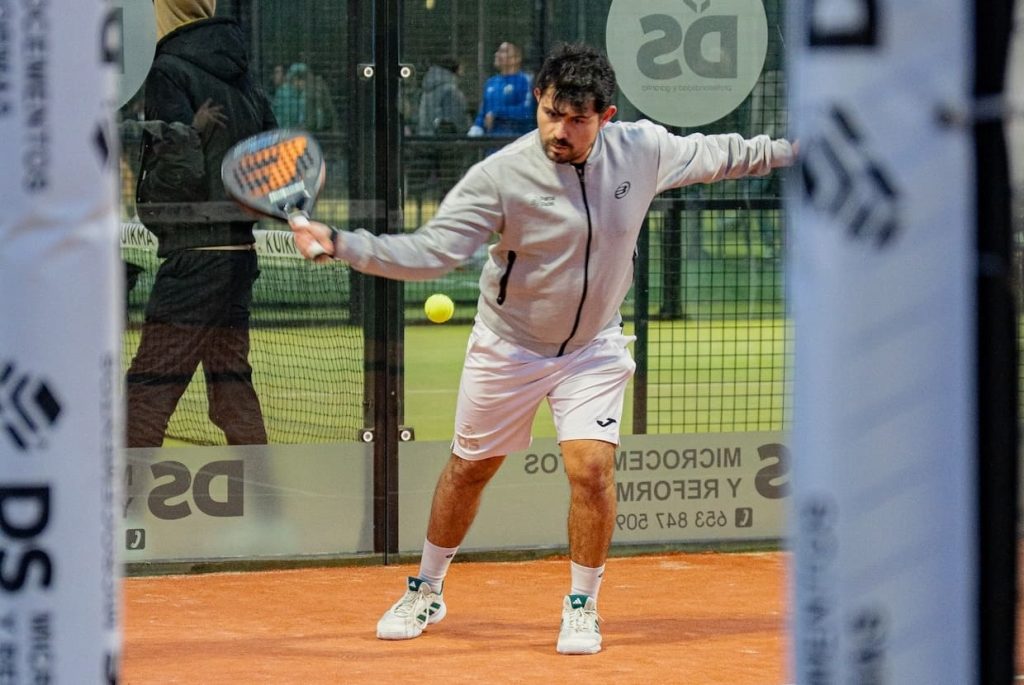
Padel has earned a huge place in Spain. You only need to pass by any club on a weekend to see it: full courts, games between friends, and people starting almost without realising it. It's a social, fun sport and much more accessible than other racket disciplines. That's why more and more people are looking for how to learn to play padel without having touched a paddle before.
The good news is that getting started is quite simple. You can enjoy the game from the very first match. Nevertheless, if you understand the rules well, practice some basic shots, and adopt certain habits from the outset, your progress will be much faster.
In this guide, you'll find the essentials for learning to play padel step by step and getting off to a good start.
How to learn to play padel from scratch
When someone considers learning to play padel, they often think they need prior experience in tennis or other sports. The reality is different. A lot of people start with no sporting background and still get hooked quickly.
What does help is to follow a small order at the beginning:
- Understand the basic rules
- Familiarise yourself with the main strokes
- To play with some frequency
Padel is played on an enclosed court with glass walls and usually in doubles format. This specific characteristic means the ball can bounce off the glass after hitting the ground, which significantly changes how points are constructed.
At first, it can feel strange to let the ball bounce off the wall. With a couple of matches, it all starts to make sense. Understanding this dynamic is one of the first steps to learning to play paddle tennis with more confidence.
The basic material to get you started
Another aspect that often causes confusion when someone wants to learn to play padel is the equipment. You don't need a large budget to start, but you do need to choose gear that makes it easy for you.
Beginner padel racket
Round-bladed paddles are usually the best choice when starting out. They offer more control and help to reduce errors as you're still getting to grips with your strokes.
As for weight, a shovel between 360 and 370 grams is usually comfortable for most beginner players.
Padel balls
At first glance, they look a lot like tennis balls, although they have slightly lower pressure. Using specific padel balls makes rallies more natural and the bounce better suited to the court.
Suitable shoes
Padel-specific trainers have soles designed for changes of direction and lateral movements. This not only improves stability but also considerably reduces the risk of sprains.
With simple but adequate equipment, learning to play padel becomes much more comfortable.
The basic strokes every player should know
One of the key moments when you start learning to play padel is getting to grips with the main strokes. You don't need to master many from day one, though you do need to understand what each one is for.
The right
It is usually the most natural shot. It is executed on the dominant side and is the one most repeated during a match.
The backhand
It comes from the opposite side to the right. At first, it might feel less comfortable, though with a bit of practice it becomes very reliable.
The volley
This is done near the net without letting the ball bounce. When you start to control the volley, the game changes quite a bit because it allows you to put pressure on your opponent.
The balloon
The lob consists of hitting the ball high towards the back of the opponent's court. It is one of the most important resources in padel because it serves to regain the net and reorganise your position.
The finish
It's the most powerful shot and is used when the ball is high. It's often the one that finishes the point.
Mastering these basics makes a big difference when you're trying Learn to play padel progressively.
How to improve faster when you already know the basics
After the first few matches, many players feel their level is stagnating. At that point, it's advisable to pay attention to some details of the game.
For example:
- Working on positioning on the track
- Understand how to play with walls
- Prioritise control over power
- Playing with people at a similar level or slightly above
Padel is much more strategic than it appears. Placing the ball well is usually more effective than trying to hit it hard all the time.
When you start to understand this, learning to play padel becomes much more interesting.
Typical mistakes of beginners
Almost all players make the same mistakes when they first start learning to play padel. Identifying them from the outset can save you a lot of frustration.
Try to win every point with power
It's very common. Many beginners hit too hard instead of looking for accuracy and placement.
Forget the balloon
The lob is one of the most useful shots in padel. It allows you to recover the net and change the dynamic of the point.
Always stay at the back
Although defending from the back, the position that usually dominates the point is near the net. Knowing when to advance is one of the keys to the game.
Avoiding these mistakes greatly speeds up the process of learning to play padel.
Padel lessons: a quick way to improve
If you really want to learn to play padel more quickly, a few lessons with a coach can make a big difference.
A teacher can help you to:
- correct the technique from the start
- Improve track positioning
- to understand tactical situations
- avoid bad habits
Many people combine classes with matches between friends. That mix usually works very well because it allows them to practice what they've learned in real situations.
The importance of playing matches
There's no better way to consolidate what you've learned than by playing. Matches help you understand the rhythm of padel and make quicker decisions during points.
There is a structure that appears constantly in many exchanges:
- Defend from the back
- To launch a balloon
- Upload to the net to pressure
As you play more matches, you start to recognise these patterns almost without thinking. At that point, learning to play padel stops feeling like an effort and becomes a natural part of the game.
Learn padel while enjoying a padel trip to Mallorca
For many fans, padel becomes more than just a sport. It's also a perfect excuse to travel, meet new people, and have a few different days out.
Imagine improving your game while training in a spectacular setting, with good weather and courts surrounded by Mediterranean scenery. That's precisely the idea behind a padel trip to Mallorca.
At Mallorca Padel Experience, we organise programmes designed for players who want to continue learning to play padel while enjoying a special few days on the island. The training sessions are led by professionals and are combined with matches, relaxation time, and opportunities to discover Mallorca.
Many participants arrive with the idea of improving certain aspects of their game… and leave with new friends, more confidence on the court, and memories that go far beyond padel.
If the idea of combining sport, holidays, and a good atmosphere appeals to you, a padel trip to Mallorca It can be a very different way to keep growing as a player.